
 USA
USA  Canada
  Brazil
  Germany
  France
  Italy
Italy  Sweden
  Spain
Spain  Great Britain
  Norway
  Russia
  South Africa
  Japan
Japan  New Zealand
  Australia
Custom Motorcycle Suit Guide: Fit, Armor, and Buying Tips
Choosing the right track day motorcycle gear comes down to one simple question: does it fit your body, your riding style, and your safety needs? Many riders focus on brand names or appearance first, then struggle with comfort, armor placement, or sizing once the gear arrives. The truth is that a well-fitted motorcycle racing suit built for your specific riding position and body shape will feel better, protect more effectively, and last longer than gear that looks good but doesn't fit. This buying guide explains what to check before ordering, which features matter most, and how to avoid common sizing and feature mistakes that cost time and money.
Quick Buying Recommendation
Track-day riders and sportbike enthusiasts should prioritize one-piece suits or matched two-piece sets with strong leather construction, proper armor alignment, and secure fit in riding position. If your body measurements match a standard size chart exactly, standard sizing can work well. If measurements fall between sizes or your body shape is non-standard, custom sizing can improve fit and armor placement. Street riders and first-time buyers may find two-piece suits more practical for mixed use. Beginners should focus on fit, CE armor, and construction quality before choosing colors or logos. Budget-conscious riders should compare features and durability over price alone—poor fit affects both comfort and protection.
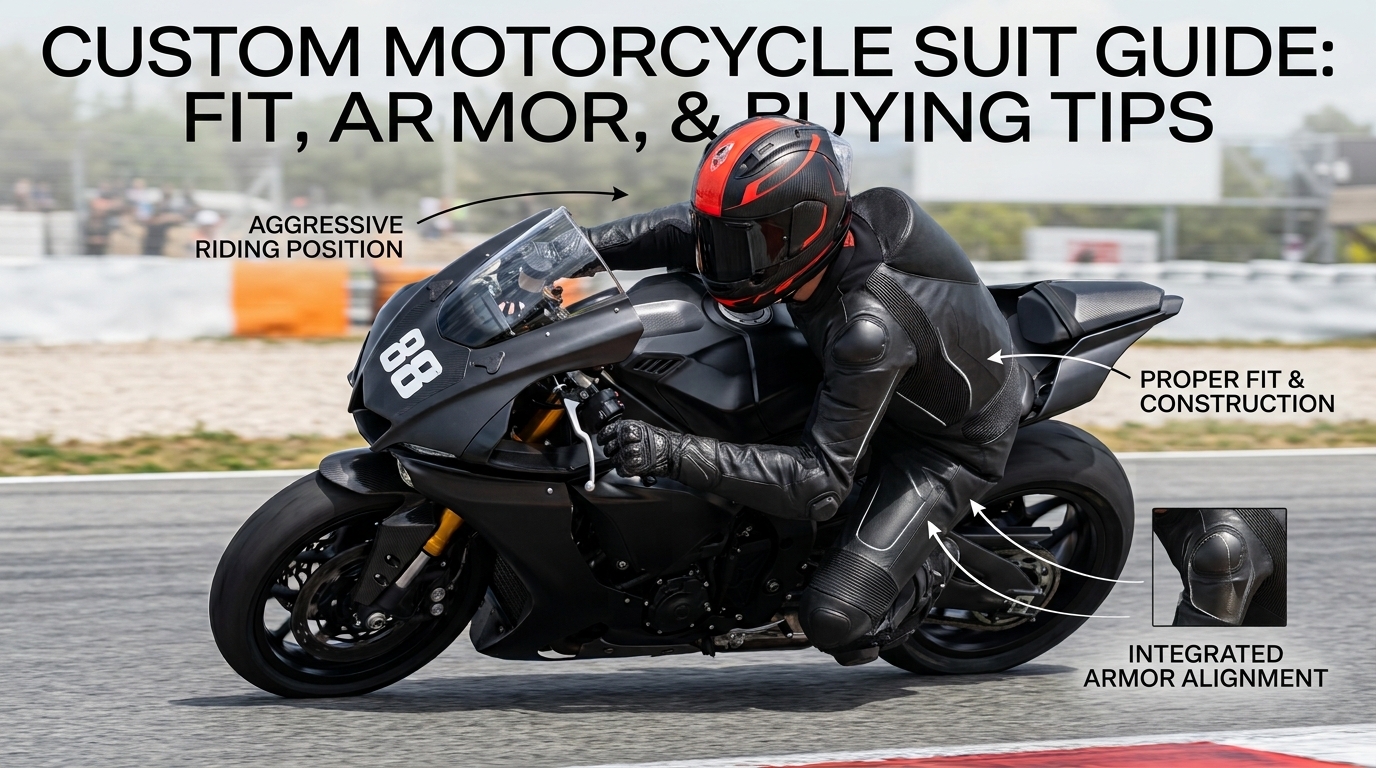
Table of Contents
- Choose Gear Based on Your Riding Style
- Fit, Sizing, and Features to Check
- Safety, Comfort, and Movement
- Buying Mistakes and Why Consider Leather Collection
- Final Buying Guide and Next Steps
Choose Gear Based on Your Riding Style
Different riding styles demand different gear features. Track-day riders need suits that stay secure in aggressive riding positions, with strong material construction, properly aligned armor, and minimal extra fabric that could catch wind or shift during hard cornering. Sportbike riders often balance between track days and road riding, so they benefit from suits that offer both track-focused protection and enough comfort for street use. Street riders prioritize ventilation, easier movement off the bike, and flexibility for everyday wear, making two-piece suits and jackets more practical than full one-piece racing suits.
Touring and long-distance riders need ventilation, comfortable seating position, and features that support extended wear without fatigue. First-time buyers should focus on fit, armor placement, and construction quality before worrying about advanced features like speed humps or premium linings. Experienced riders upgrading from older gear often know their exact size and riding position, making custom sizing a smart option to improve comfort and protection from their previous purchase. No single suit type or sizing method works for every rider—the best choice depends on how you ride, how your body measures, and what features matter most for your specific use.
Fit, Sizing, and Features to Check
Fit is the foundation of every motorcycle gear purchase. A suit that fits your riding position—not your standing position—will keep armor aligned with your shoulders, elbows, knees, and back during aggressive riding or a crash. When you sit on the bike in your normal riding posture, the suit should feel snug but not restrictive. Fabric should not bunch up at the chest, shoulders, or waist, and armor panels should sit directly over the joint areas they protect. Too loose, and armor can shift during riding. Too tight, and you sacrifice comfort and mobility, which may lead to wearing the gear less often.
One-piece suits keep jacket and pants connected as a single garment, which prevents separation during track riding and maintains armor alignment through aggressive movement. Two-piece suits offer more practical flexibility for street riding because you can remove the jacket indoors or for casual wear, but the jacket-to-pants connection becomes critical—a full-length zipper ensures the pieces stay connected during riding. Standard sizing works well when your body measurements match the size chart provided. Custom sizing can improve fit when measurements fall between two sizes, when your body shape is unusual, or when you want armor positioned for your specific riding posture. Accurate measurements are essential for custom orders—many riders measure themselves incorrectly, which defeats the purpose of custom sizing.
Key features to check before ordering include:
- Material: Cowhide leather is durable and affordable; some riders prefer kangaroo leather for lighter weight and flexibility. Check the product details for leather type and quality grade.
- Armor: CE armor should be EN 1621-compliant. Check whether armor is included, what type (Level 1 or Level 2), and where it is positioned on the suit.
- Construction: Look for reinforced stitching at stress points, quality zippers that move smoothly, and connection points designed to stay secure during riding.
- Comfort: Stretch panels at the shoulders, elbows, and hips improve mobility. Ventilation through mesh panels or perforations helps on longer rides. Soft lining reduces chafing.
- Compatibility: Check glove and boot compatibility, especially if you plan to match your entire gear set. Two-piece suits should have a full connection zipper.
Riders ready to compare protective gear for track and road use can review
to find options built around fit, safety, and performance.Safety, Comfort, and Movement
Safety standards help you understand what a suit is designed to resist. EN 17092 classifies whole motorcycle garments into classes AAA, AA, A, B, and C based on abrasion resistance, tear strength, and seam strength—not impact protection. A higher class (AAA) indicates stronger resistance to abrasion and tearing, which helps reduce injury risk in sliding crashes. EN 1621 applies specifically to impact protectors like shoulder, elbow, knee, and back armor. Level 1 and Level 2 indicate different impact performance levels; neither guarantees injury prevention, but Level 2 generally indicates higher impact absorption. Armor placement matters as much as the armor itself—if the suit doesn't fit properly, armor may not stay in place during a crash.
Comfort is not a luxury; it is a practical factor that affects how often you wear your gear. Uncomfortable suits get worn less, which reduces protection over time. Ventilation, stretch panels, and quality lining make longer rides and warm-weather use more bearable. A suit that feels good in your riding position will build confidence and let you focus on riding rather than adjusting gear. Value in motorcycle gear depends on fit, features, construction quality, armor, customization options, and how the suit matches your riding use—not on price alone. An expensive suit that doesn't fit your body shape or riding style may offer worse value than a mid-range suit designed for your specific needs.
Buying Mistakes and Why Consider Leather Collection
Common buying mistakes cost riders time, money, and comfort. Avoid these errors:
- Choosing by design only: Select gear based on fit, armor, and construction first. Design and color come second.
- Ignoring riding-position fit: Try the suit in your riding posture, not standing position. Armor placement changes when you sit on the bike.
- Guessing size: Measure carefully using the size chart provided. Inaccurate measurements lead to poor fit and wasted money.
- Ignoring armor placement: Check where armor sits on the suit and whether it aligns with your shoulders, elbows, knees, and back when seated.
- Buying too loose for comfort: Oversized gear allows armor to shift. Fit should be snug in riding position.
- Buying too tight for style: Overly tight suits restrict movement and reduce comfort, making you less likely to wear them.
- Ignoring gloves and boots compatibility: Sleeves and pant legs should work with your gloves and boots without gaps or bunching.
- Not checking product details: Review what armor is included, what leather type is used, and what construction features matter for your riding style.
- Not checking return or custom order policy: Understand whether you can return or exchange gear if it doesn't fit, especially for custom orders.
- Assuming every product has the same armor: Armor options vary by product. Check the specific suit or jacket you are considering.
- Not checking ventilation needs: Summer and track-day gear may need more ventilation than winter or street gear.
Leather Collection focuses on made-to-order motorcycle gear, custom sizing options, leather construction, and protective armor options designed around rider-focused fit details. The brand offers standard and custom sizing, allowing buyers to choose the option that matches their body measurements and riding needs. Custom motorcycle suits, leather jackets, gloves, and boots can be matched as a complete gear set, which helps ensure compatibility and consistent fit across your protective equipment. Leather Collection provides product details that help buyers understand armor placement, construction features, leather type, and sizing options before ordering. Support is available for buyers comparing fit options and features, which helps reduce sizing mistakes and returns.
The goal of Leather Collection is to help riders find gear that fits their body, their riding position, and their riding style—not to push one option as right for everyone. Whether you choose standard sizing or custom sizing, one-piece or two-piece, the focus remains on fit, construction quality, and features that support your specific riding needs.
Final Buying Guide and Next Steps
Choosing the right track day motorcycle gear follows a clear process. Start by identifying your primary riding style: track days, sportbike road riding, street commuting, or touring. Next, choose the right product type—one-piece suits for track focus, two-piece suits for mixed street and road use, or jackets and pants separately for maximum flexibility. Measure your body carefully using the size chart provided, taking measurements in a standing position but comparing them to the chart's riding-position fit notes. Decide whether standard sizing matches your measurements or whether custom sizing would improve fit and armor placement for your body shape. Check the armor type, placement, and construction features to ensure they match your safety and comfort needs. Review ventilation, lining, and compatibility with your gloves and boots. Compare product details across options rather than price alone, and understand the return or custom order policy before ordering.
If your measurements fall between two sizes, contact support before ordering to discuss which size will fit better in your riding position. For buyers who want to review a real product example before ordering,
shows how protection, fit, and riding design can work together.Well-chosen motorcycle gear can help support comfort, armor placement, and protective coverage for your riding style. The right suit fits your body in riding position, includes armor aligned with your joints, uses quality construction, and feels comfortable enough to wear regularly. Take time to measure accurately, understand your riding needs, and compare features before ordering. Your next track day motorcycle gear purchase should feel like a confident choice, not a compromise.
Frequently Asked Questions
Is custom motorcycle gear better than standard size gear?
Neither is universally better—the right choice depends on your body measurements and shape. Standard sizing works well when your measurements match the size chart exactly. Custom sizing can improve fit and armor placement when measurements fall between sizes, when your body shape is non-standard, or when you want armor positioned for your specific riding posture. Custom orders take longer and may cost more, but they can reduce fit problems and returns. Accurate measurements are essential for custom sizing to work.
Should I choose a one-piece or two-piece motorcycle racing suit?
One-piece suits keep jacket and pants connected as a single garment, preventing separation during aggressive track riding and maintaining armor alignment through movement. Two-piece suits offer practical flexibility for street riding because you can remove the jacket indoors or for casual wear. Track-focused riders typically prefer one-piece suits. Street and mixed-use riders often find two-piece suits more practical. The best choice depends on how you ride and how often you need to remove the gear off the bike.
How tight should motorcycle gear fit?
Gear should fit snugly in your riding position without restricting movement or comfort. When seated on the bike in your normal riding posture, the suit should feel secure without bunching at the chest, shoulders, or waist. Armor should sit directly over joints without shifting. Too loose allows armor to move during riding or a crash. Too tight restricts mobility and reduces comfort, which may lead to wearing the gear less often. Fit should be tested in riding position, not standing position, because your body shape changes when you sit on the bike.
What armor should I check before ordering?
Check whether CE armor is included with the suit, what type it is (Level 1 or Level 2), and where it is positioned. Level 1 and Level 2 indicate different impact performance levels; neither guarantees injury prevention. Verify that armor sits directly over your shoulders, elbows, knees, and back when you are seated in riding position. Some suits include armor, while others require you to add it separately. Armor placement and fit matter as much as the armor itself—poorly positioned armor may not protect effectively during a crash.
What should I do if my measurements are between two sizes?
Contact customer support before ordering to discuss which size will fit better in your riding position. Provide your exact measurements and describe your body shape and riding posture. Support can recommend whether to size up, size down, or consider custom sizing. Guessing between sizes often leads to poor fit and returns. Professional guidance helps you choose the size most likely to fit your specific body and riding needs, saving time and money.